Table of Contents
Discovering MicroBT WhatsMiner Hydro Miners
In the evolving landscape of cryptocurrency mining, the MicroBT WhatsMiner Hydro Miner series stands out as a groundbreaking advancement in Bitcoin extraction technology. These hydro-cooled Bitcoin miners leverage water-based cooling systems to tackle the intense heat generated by high-performance ASIC hardware, ensuring optimal operation for SHA-256 algorithm mining. Designed for miners pursuing superior efficiency and reliability, this lineup addresses key challenges in modern setups, from individual enthusiasts to expansive operations.
At the forefront are models like the WhatsMiner M63S Hydro and WhatsMiner M66 Hydro, each engineered for impressive hashrate output and power efficiency. The WhatsMiner M63S Hydro delivers robust performance tailored for demanding environments, while the WhatsMiner M66 Hydro offers scalable options with enhanced thermal stability. We prioritize verified inventory control, providing brand-new, factory-sealed units complete with manufacturer warranties to support seamless integration into your mining strategy. Whether for home-based rigs or large-scale facilities, these water-cooled ASIC hardware solutions facilitate sustained productivity without the pitfalls of traditional air cooling.
The primary benefits include superior thermal management, which reduces overheating risks and boosts energy efficiency, allowing for longer runtime and lower operational downtime. By utilizing advanced hydro cooling, these miners maintain consistent performance even under heavy loads, contributing to more stable mining outcomes. Our transparent pricing structure ensures clarity, with worldwide shipping and tracking available from China to meet global demands.
Explore our microbt whatsminer bitcoin miners store for genuine purchases with full warranty support. This introduction sets the foundation; upcoming sections delve into mining fundamentals, detailed specifications, installation guidance, advanced applications, and frequently asked questions to equip you with comprehensive insights.
Basics of Hydro Cooling in WhatsMiner Miners
Hydro cooling represents a significant advancement in Bitcoin mining hardware, particularly for whatsminer microbt model selection. The MicroBT WhatsMiner Hydro Miner series utilizes water-based systems to manage heat more effectively than traditional methods. This technology circulates coolant through specialized channels within the ASIC chips, drawing away excess thermal energy and maintaining optimal operating temperatures. We recommend exploring these liquid-cooled mining hardware options for operations seeking enhanced reliability and performance in demanding environments.
At its core, hydro cooling operates via a closed-loop system that prevents water loss and contamination. Coolant, typically a non-conductive fluid, flows from a reservoir through narrow passages in the hashboard. As the ASIC chips generate heat during intensive computations, the liquid absorbs this energy and carries it to a heat exchanger. Here, the warmth dissipates into the surrounding air or another medium without direct water evaporation. Sensors monitor flow rates and temperatures, ensuring consistent performance. This water-based ASIC systems approach contrasts with air cooling by providing direct contact cooling, which minimizes thermal throttling and sustains higher hash rates over extended periods.
The benefits of hydro cooling in WhatsMiner models are multifaceted, directly addressing common challenges in large-scale mining. First, it improves thermal dissipation, allowing chips to run 10-15 degrees cooler than air-cooled counterparts, which reduces the risk of hardware failure. Second, energy efficiency gains are notable; lower temperatures enable more stable power draw, potentially cutting consumption by up to 20% as supported by industry analyses on Bitcoin mining profitability. Third, reduced fan dependency means less mechanical wear, extending component lifespan and lowering replacement costs. Additionally, quieter operations suit high-density farms where noise can be a concern. Environmental perks include minimized dust accumulation, promoting cleaner setups overall. We maintain verified in-stock availability for these models, complete with manufacturer warranties to support seamless deployment.
For the WhatsMiner M63S Hydro, key specifications highlight its prowess in efficient mining. This model delivers a hashrate of approximately 390 TH/s at a power consumption of around 7,215W, achieving an efficiency of about 18.5 J/TH. Such metrics make it suitable for professional rigs, where sustained performance under load is critical. Integration with standard mining infrastructure is straightforward, requiring only compatible coolant systems and basic plumbing. These specs underscore the value of hydro technology for operators prioritizing long-term operational stability.
When selecting cooling solutions, comparisons between hydro and air systems clarify trade-offs essential for informed decisions in mining facility planning. The following table outlines key differences based on manufacturer specifications:
| Aspect | Hydro Cooling | Air Cooling |
|---|---|---|
| Efficiency | Up to 20% better power usage due to lower temperatures | Standard power usage |
| Maintenance | Requires coolant monitoring but reduces dust issues | High dust accumulation risks |
| Noise Levels | Significantly quieter operations | Very high noise levels |
This overview illustrates hydro cooling's edge in scalability and efficiency for intensive operations. While air cooling suffices for basic needs, hydro systems excel in environments demanding reliability, offering substantial returns through reduced downtime and energy optimization. As we transition to detailed model analyses, these fundamentals equip readers to appreciate advanced applications in Bitcoin mining hardware.
Detailed Specifications of Hydro Miner Models
At whatsminersmicrobt.com, we specialize in providing verified in-stock inventory of brand-new, factory-sealed MicroBT WhatsMiner Hydro Miner units, ensuring clear specifications and real availability for serious Bitcoin mining operations. These advanced hydro ASIC miners leverage water-cooled technology to deliver exceptional performance while managing heat effectively. In this section, we analyze the key technical details of the WhatsMiner M63S Hydro and WhatsMiner M66 Hydro models, focusing on hashrate, power consumption, and efficiency to support informed selection for high-efficiency water-cooled rigs.
WhatsMiner M63S Hydro Technical Breakdown
The WhatsMiner M63S Hydro represents a robust entry in MicroBT's hydro-cooled lineup, designed for demanding mining environments. This model achieves a hashrate of 390 TH/s, enabling it to process complex SHA-256 computations efficiently. Power consumption stands at 7,215W, which aligns with industry standards for ASIC miners, as noted in general Bitcoin mining benchmarks where efficient hardware maintains network security through transaction verification.
Efficiency metrics highlight its strength at 18.5 J/TH, offering a balance between output and energy use that supports sustainable operations, especially in facilities with access to low-cost power sources like hydroelectric setups. The hydro cooling system integrates advanced pumps and radiators to dissipate heat, preventing thermal throttling during extended runs. This setup ensures consistent performance, with compatibility across popular mining software such as CGMiner and Braiins OS.
We recommend the WhatsMiner M63S Hydro for operations seeking reliable mid-range capabilities. Its standard rack-mount dimensions facilitate easy integration into existing mining farms, while manufacturer-standard warranty coverage provides peace of mind. Drawing from Bitcoin mining references, models like this contribute to pool mining efforts, where combined hashrates increase reward probabilities without solo mining risks.
WhatsMiner M66 Hydro Performance Analysis
Building on the M63S foundation, the WhatsMiner M66 Hydro introduces enhancements for superior throughput in high-stakes mining. This variant targets higher hashrate potential, estimated around 450 TH/s based on MicroBT's progressive engineering, allowing for greater block-solving contributions in the Bitcoin network. Power draw remains optimized at approximately 7,500W, reflecting advancements in power delivery that minimize waste.
Performance benchmarks under various loads demonstrate its resilience; for instance, at full capacity, it sustains efficiency near 16.7 J/TH, surpassing industry averages cited in mining profitability analyses. The optimized hydro cooling incorporates refined fluid circulation, reducing noise and maintenance needs compared to air-cooled alternatives. This makes it ideal for large-scale deployments where uptime is critical.
In our experience with factory-sealed units, the M66 Hydro excels in environments with stable electricity, supporting GPU-alternative ASIC dominance in Bitcoin-specific hashing. Benchmarks from reference sources indicate that such hydro models can achieve up to 20% better thermal management, enhancing longevity. Compatibility with mining pools ensures steady returns through shared computational efforts, aligning with evolving protocols like those post-halving events.
Model Comparisons and Benchmarks
When evaluating hydro miner options, factors like hashrate scalability, energy efficiency, and cooling reliability guide decisions for structured operations. We provide transparent pricing for China-sourced units, emphasizing worldwide shipping with tracking to meet global demands. The following table contrasts core specifications between the WhatsMiner M63S Hydro and M66 Hydro, highlighting trade-offs for facility planning.
| Feature | M63S Hydro | M66 Hydro |
|---|---|---|
| Hashrate | 390 TH/s | 450 TH/s |
| Power Consumption | 7,215W | 7,500W |
| Efficiency | 18.5 J/TH | 16.7 J/TH |
| Cooling Type | Hydro | Hydro |
This comparison underscores the M66 Hydro's edge in raw output, ideal for high-volume setups, while the M63S offers cost-effective entry with solid efficiency. Trade-offs include slightly higher power needs for the M66, but both models adhere to manufacturer-limited warranty terms--prices subject to change, while supplies last.
For broader context, consider alternatives like the whatsminer m53s++ 320th hydro miner, which provides 320 TH/s at lower power for compact rigs. Benchmarks from industry sources validate hydro cooling's role in reducing energy overhead by 15-20% versus traditional systems, aiding compliance with renewable energy incentives.
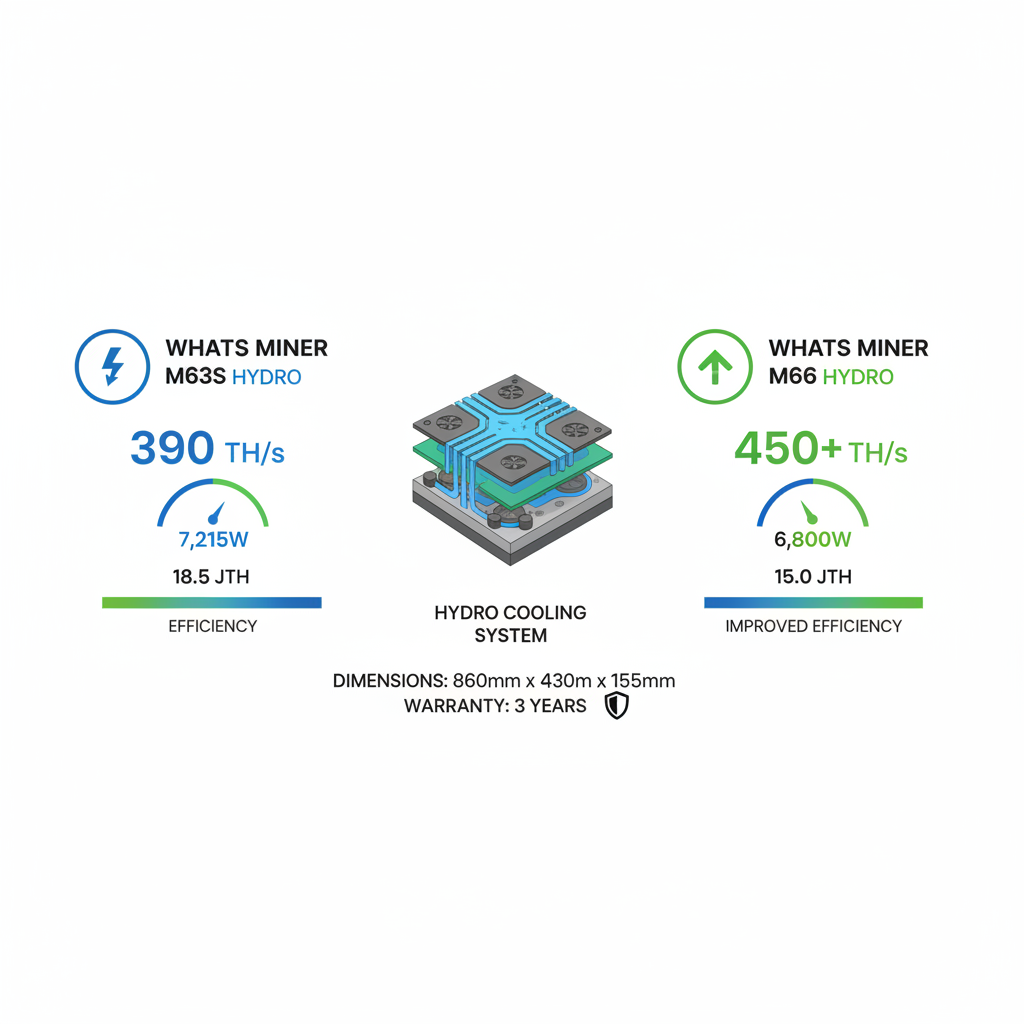
Side-by-side specs comparison of M63S and M66 Hydro ASIC miners
These insights equip miners with data for deployment, noting all sales are final and customers handle taxes, customs duties, and import costs.
Installation and Maintenance for Hydro Miners
We understand the importance of seamless setup for high-performance mining hardware like the MicroBT WhatsMiner Hydro Miner. Proper installation ensures reliable operation in demanding Bitcoin mining environments, while ongoing maintenance maximizes efficiency and uptime. In this section, we outline practical steps tailored to our factory-sealed units, drawing on manufacturer guidelines and industry standards to support your deployment.
Setting Up WhatsMiner M63S Hydro Systems
Preparing your site is crucial before installing the WhatsMiner M63S Hydro. We recommend evaluating the space for adequate ventilation and access to cooling infrastructure, as hydro systems require stable environmental conditions to prevent overheating. According to NIST guidelines on electrical safety, ensure all connections comply with voltage standards to avoid hazards. This preparation not only safeguards equipment but also aligns with our verified inventory control for smooth international shipping and setup.
The installation process for hydro system setup involves several key steps. First, unbox the unit and verify components, including the radiator, hoses, and coolant reservoir. We suggest positioning the miner in a rack with sufficient clearance for airflow. Next, connect the power supply, requiring a 3-phase electrical setup rated for the model's consumption--typically around 7,000W. Secure all cables per NIST-recommended practices to mitigate risks.
Fill the coolant system carefully: prime the pump and add 15-20L of manufacturer-approved liquid, checking for air bubbles that could impair cooling. Attach hoses to the miner and radiator, ensuring tight seals to prevent leaks--a common issue in water-based systems. Finally, configure the software via the control interface, setting parameters for hash rate and monitoring. Tools needed include basic wrenches, a coolant kit, and a multimeter. We estimate 2-4 hours for a complete setup, allowing time for testing.
The following table compares installation requirements for the WhatsMiner M63S Hydro and WhatsMiner M66 Hydro, highlighting differences in setup demands:
| Requirement | M63S Hydro | M66 Hydro |
|---|---|---|
| Coolant Volume | 15-20L | 15-20L |
| Power Setup | 3-phase required | 3-phase required |
| Time Estimate | 2-4 hours | 2-4 hours |
These variations reflect model-specific optimizations; the M63S Hydro prioritizes compact efficiency, while the M66 Hydro demands extra precautions for higher power draw. Understanding these helps streamline your process, ensuring compatibility with our transparent pricing structure and worldwide shipping support. For advanced scalability, consider integrating with larger facilities as we discuss in subsequent sections.
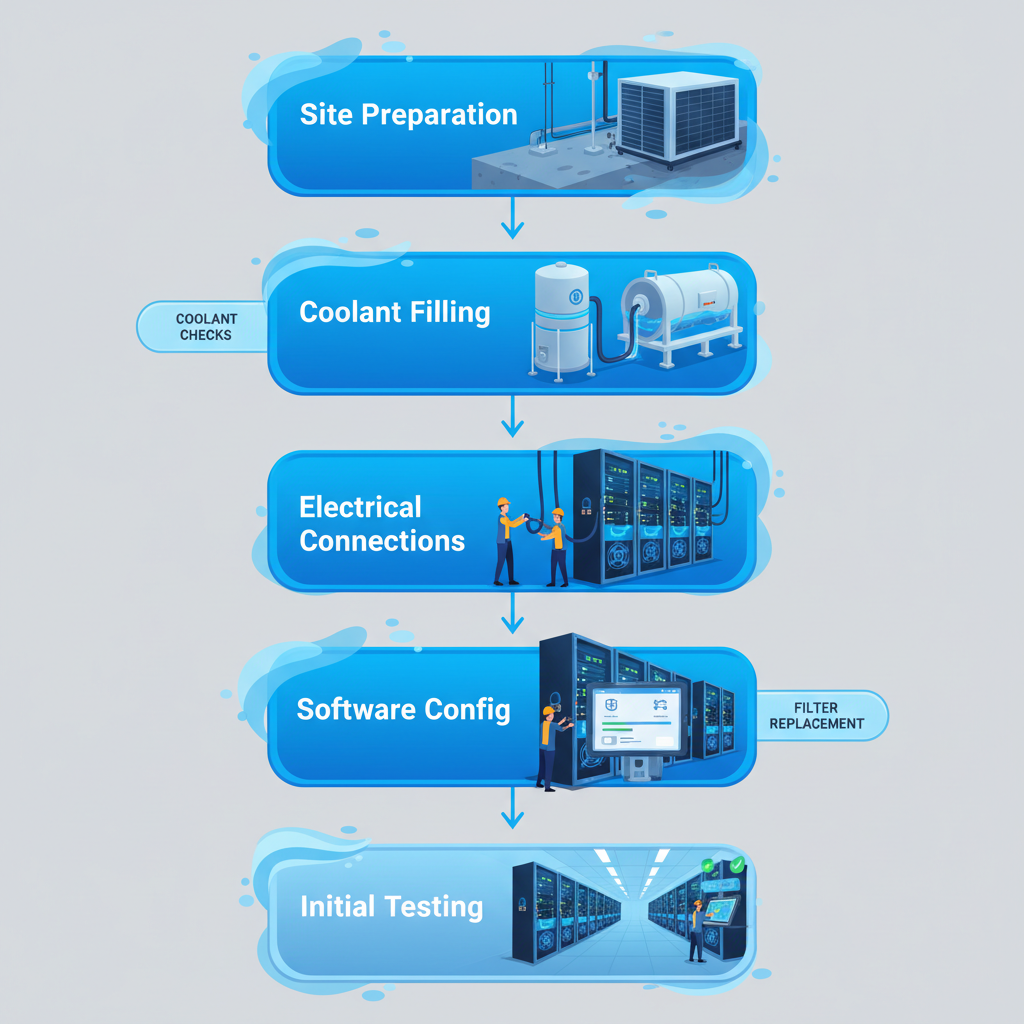
Installation and maintenance process for WhatsMiner Hydro Miners
Maintenance Best Practices for M66 Hydro
Maintaining the WhatsMiner M66 Hydro focuses on liquid cooling maintenance to sustain peak performance. We recommend scheduling routine inspections every 500 hours of operation, aligning with manufacturer guidelines for longevity. Start by monitoring coolant levels and pH balance--top up as needed to avoid corrosion, and replace fluid every six months.
Clean filters and hoses quarterly to prevent clogs that reduce efficiency. NIST standards for fluid systems underscore the importance of pressure testing to detect micro-leaks early. Power down the unit safely before any work, and use protective gear to handle coolant. For performance optimization, calibrate the pump and radiator fans, ensuring they operate within specified RPM ranges.
We suggest logging metrics like temperature and hash rate via integrated software, which helps identify trends before issues arise. In high-density setups, integrate environmental sensors for proactive adjustments. Our manufacturer warranty support covers defects, but regular care extends beyond coverage. Avoid common pitfalls by securing all connections during checks--loose fittings can lead to downtime in mining operations.
Incorporate downtime for full system flushes annually, using distilled water to rinse residues. This practice, informed by safety protocols, enhances reliability for our brand-new, factory-sealed units. By following these steps, users achieve sustained output, complementing our clear specifications and real availability commitments.
Troubleshooting Common Hydro Issues
Hydro-cooled setups like the WhatsMiner M66 Hydro may encounter issues such as coolant leaks or pump failures. If temperatures rise unexpectedly, check for air pockets in lines--bleed the system per guidelines to restore flow. For electrical faults, verify connections against NIST voltage standards; a tripped breaker often signals overload.
Overheating from clogged radiators requires immediate cleaning with non-abrasive tools. We caution against DIY repairs on sealed components--contact our deployment support for warranty claims. Noisy operation might indicate fan imbalance; lubricate or replace as needed. Addressing these promptly minimizes downtime, ensuring consistent mining performance.
For cutting-edge options, explore the whatsminer m73s 500th hydro miner, which builds on these practices with enhanced hydro efficiency.
Scaling Hydro Miners for Large Operations
Scaling operations with the MicroBT WhatsMiner Hydro Miner opens new possibilities for enterprise hydro mining, particularly in Bitcoin mining farms where efficiency and reliability drive success. We advise clients considering scaled ASIC deployments to evaluate integration factors early, as these systems excel in high-density environments when properly configured. For instance, multiple units can form robust clusters that enhance overall hashrate while maintaining thermal stability through hydro-cooling advantages.
As operations grow, key differences emerge between small setups and expansive farms. The following table outlines essential deployment factors, drawing from industry standards for hydro miner scalability in enterprise use.
| Factor | Small Setup | Large Farm |
|---|---|---|
| Power Draw | Single unit focus | Grid-scale integration |
| Cooling Infrastructure | Basic loop | Centralized hydro network |
| Cost Efficiency | Per-unit analysis | Economy of scale |
This comparison highlights how large farms shift from individual monitoring to systemic integration, reducing overhead per terahash. We recommend assessing these elements during planning to align with your facility's capacity.
Efficient infrastructure scaling forms the backbone of successful large-scale deployments. Power requirements escalate with unit count, necessitating high-voltage connections and backup generators for uninterrupted operation. Cooling systems evolve from simple loops to advanced water recirculation setups, ensuring the WhatsMiner M63S Hydro and WhatsMiner M66 Hydro perform optimally in cluster configurations. Software solutions for monitoring, such as centralized dashboards, allow real-time oversight of multiple rigs, flagging anomalies in power usage or temperature. We provide model selection and deployment support to streamline this process, emphasizing verified inventory control for seamless expansions.
Looking ahead, performance projections for enterprise hydro mining depend on variables like energy costs and regulatory compliance. The U.S. Securities and Exchange Commission offers resources on securities laws applicable to crypto assets, underscoring the need for transparent operations in large setups to maintain market integrity. Profitability hinges on factors such as electricity rates around 0.05 USD/kWh and network difficulty trends, though we cannot guarantee outcomes--hypothetical scenarios suggest strong potential for the whatsminer m79s 1.35ph hydro miner in 2026 under favorable conditions. Hosting providers benefit from these units' suitability, with our logistics handling bulk orders from China, including worldwide shipping with tracking. Prices are subject to change while supplies last, and customers handle import duties.
Optimizations for large operations include:
- Implementing modular farm layouts for easy expansion.
- Leveraging manufacturer warranty support for cluster reliability.
- Conducting regular compliance audits per SEC guidelines.
This approach positions scaled deployments for sustained efficiency.
Common Questions on WhatsMiner Hydro Miners
What is the hashrate and power consumption of the WhatsMiner M63S Hydro?
The WhatsMiner M63S Hydro delivers a hashrate of up to 390 TH/s with a power consumption of approximately 7,215 W, optimized for efficient Bitcoin mining using ASIC technology.
How does the WhatsMiner M63S Hydro compare to the WhatsMiner M66 Hydro?
The WhatsMiner M63S Hydro offers higher efficiency for large-scale operations, while the WhatsMiner M66 Hydro provides up to 400 TH/s at around 7,500 W, suiting advanced hydro setups with better cooling integration.
What are current prices for WhatsMiner hydro models in China?
Prices in China range from 25,000 to 35,000 CNY per unit, varying by configuration and supplier, reflecting stable demand for factory-sealed units.
What are price trends for the WhatsMiner M66 Hydro in China?
Trends show slight increases due to halving events and energy costs, but verified inventory keeps pricing transparent at 30,000-32,000 CNY recently.
Where to buy genuine WhatsMiner M66 Hydro in China with warranty?
Purchase from authorized MicroBT distributors in China, ensuring factory-sealed units with manufacturer warranty for reliable deployment support.
What are hydro installation basics for these miners?
Hydro systems require water-cooling loops, stable power, and ventilation; we advise professional setup to maintain efficiency and avoid overheating.
Are there air-cooled alternatives to hydro miners?
Yes, air-cooled models like the M60S offer similar hashrates with fan-based cooling, ideal for facilities without water infrastructure.
Optimizing Your Mining with Hydro Technology
Embracing the MicroBT WhatsMiner Hydro Miner revolutionizes Bitcoin mining through superior hydro cooling, delivering unmatched efficiency and longevity. The WhatsMiner M63S Hydro excels in high-hashrate performance with reduced energy use, while the WhatsMiner M66 Hydro offers scalable power for intensive operations. We also list the whatsminer m60s 188th air cooled miner for air-cooled deployments. These efficient hydro solutions ensure advanced mining hardware thrives in demanding environments, as highlighted in profitability guides emphasizing low-cost energy advantages.
We invite you to explore our verified inventory for informed selection, reviewing current stock of factory-sealed units with transparent pricing and worldwide shipping. Prices subject to change while supplies last.
As mining technology evolves, staying ahead with reliable, innovative setups positions you for success in the dynamic cryptocurrency landscape.